
Connection between Emmi Pikler and Hengstenberg
“There was also a kind of spirituality brewing in the culture at that time, with many new currents and directions being developed and practiced. It was then that Pikler learned about healthy diets, nutrition, and nature, looking to her sister-in-law, who had healed quickly after undergoing lung surgery while adhering to the philosophy of Elsa Gindler.
Gindler’s approach focused on the development of awareness of the senses and to come in contact with oneself. In her sessions, she invited her participants to express themselves through conscious posture, movements, and breathing in a natural and authentic manner. Her somatic work also played a key role in the development of body psychotherapy.
Sharing the same belief of being present in the world at large, to what is now commonly known as mindfulness, Pikler then invited Gindler to come to Budapest. Unable to visit, Gindler instead put her in touch with her disciple Elfriede Hengstenberg.


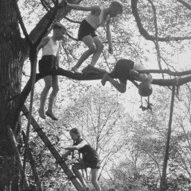
Hengstenberg and Pikler, together with a group of colleagues and friends, met for four weeks each summer during the years 1935–1937 to experiment with this new way of being. Hengstenberg and Pikler then refocused their energies on children; allowing them to find their equilibrium (emotional and physical) by being offered a safe environment to autonomously explore laws of gravity.
The connection between Pikler and Gindler continues today at the Pikler Institute with the work of Ute Strub, a disciple of Hengstenberg.
These theories helped foster Pikler’s notion of returning to nature and, with it, a healthier way of life, one that also adhered to preventing diseases, not only treating them. She incorporated this approach into her practice and developed a complex system of providing care for and bringing up healthy infants and young children under age three.” From, In Loving Hands, by Elsa Chahin and Anna Tardos.
